Performative Research
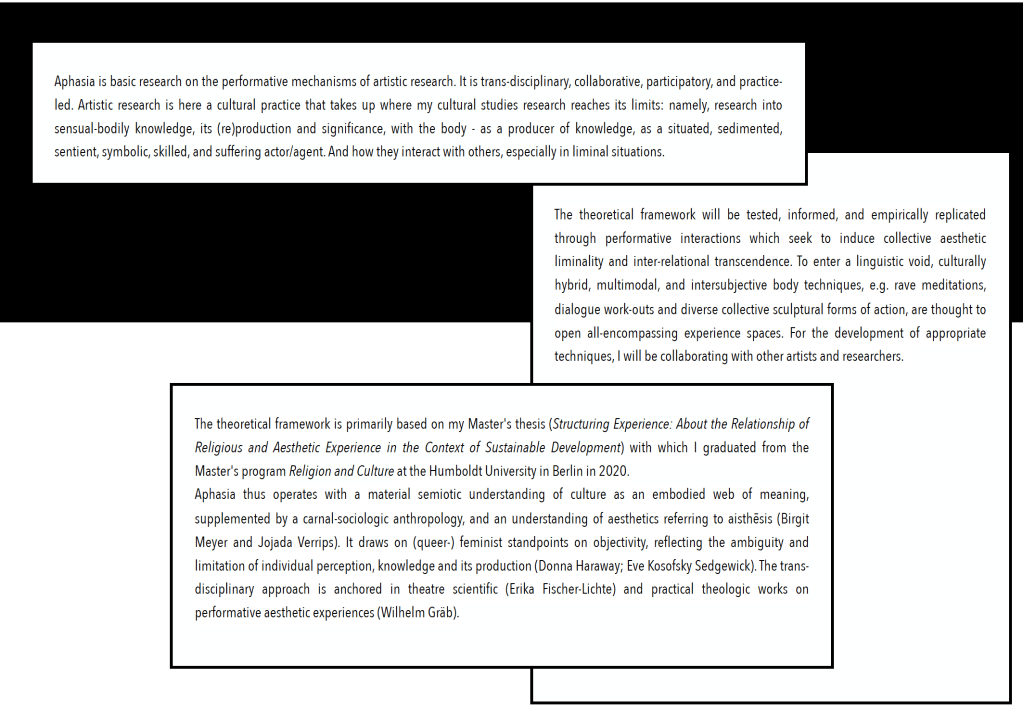
Aphasia is an aisthetic research on the gap, on the embodiment of disruption, and the potential of aesthetic liminality to unleash unconscious embodied knowledge. The focus is set on the void between the not-anymore and the not-yet in the individual and collective processing of disruptive moments and the resulting potential gain of knowledge and paradigm shift. What happens with our bodies in liminality? How does liminality feel? Digging into the gap, however, includes an exploration of the before and after, and of body techniques that allow a conscious perception of the underlying processes.
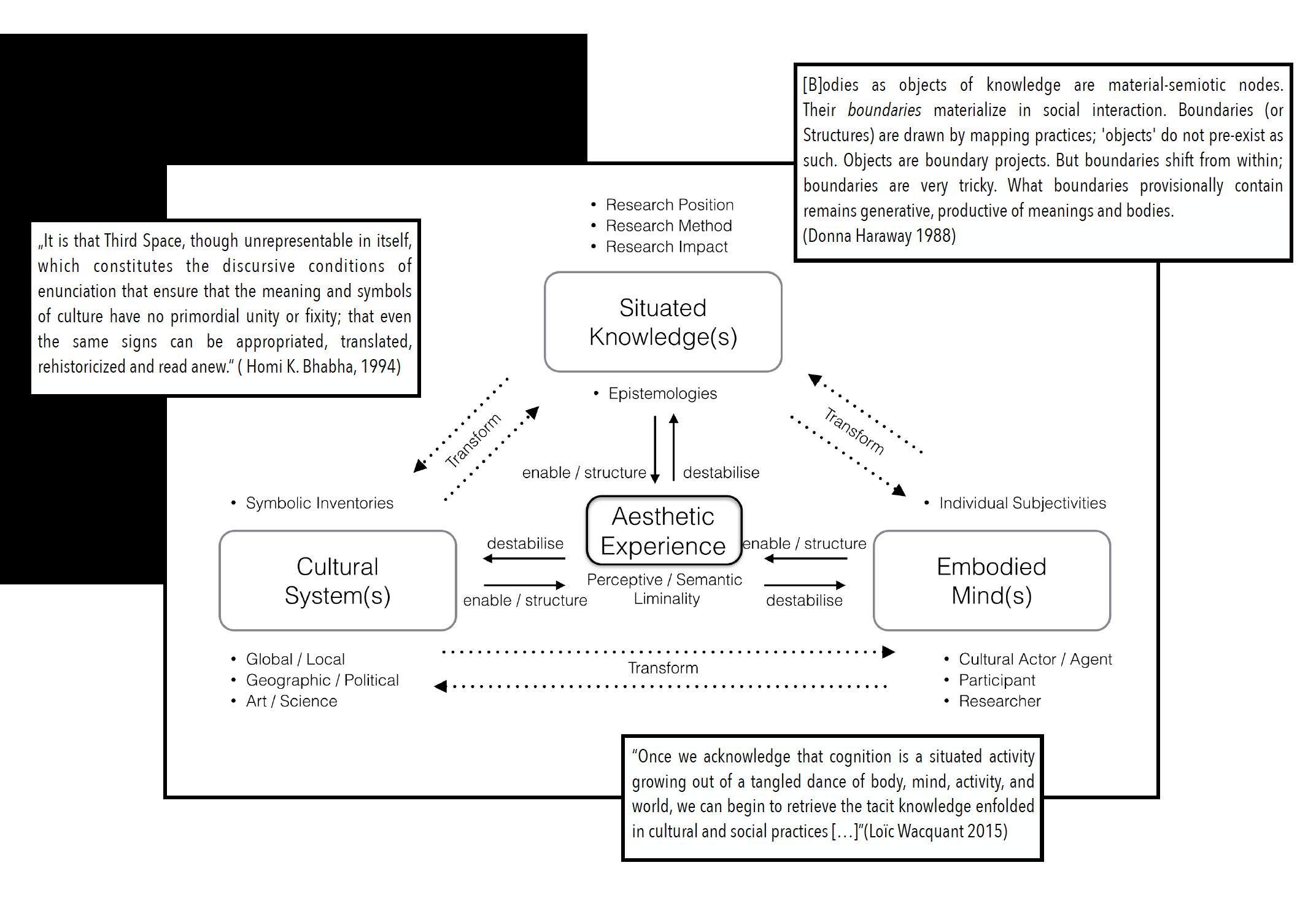
Which semiotic ideologies and sensational hierarchies determine and accompany these processes? How do experiences that exceed linguistic expressions inscribe themselves in individual and collective subjectivity? How does our biography transfer into our body memory and become paraphrased by our physical expressions? How may social class, migration, or gender translate into how we move, see, or scent? (How) can we create a dialogue about it without falling back into the toxic structures of spoken and written language? Can we establish third spaces (Homi K. Bhabha 1994) which open new possibilities for conversations of embodied minds through performative interactions?
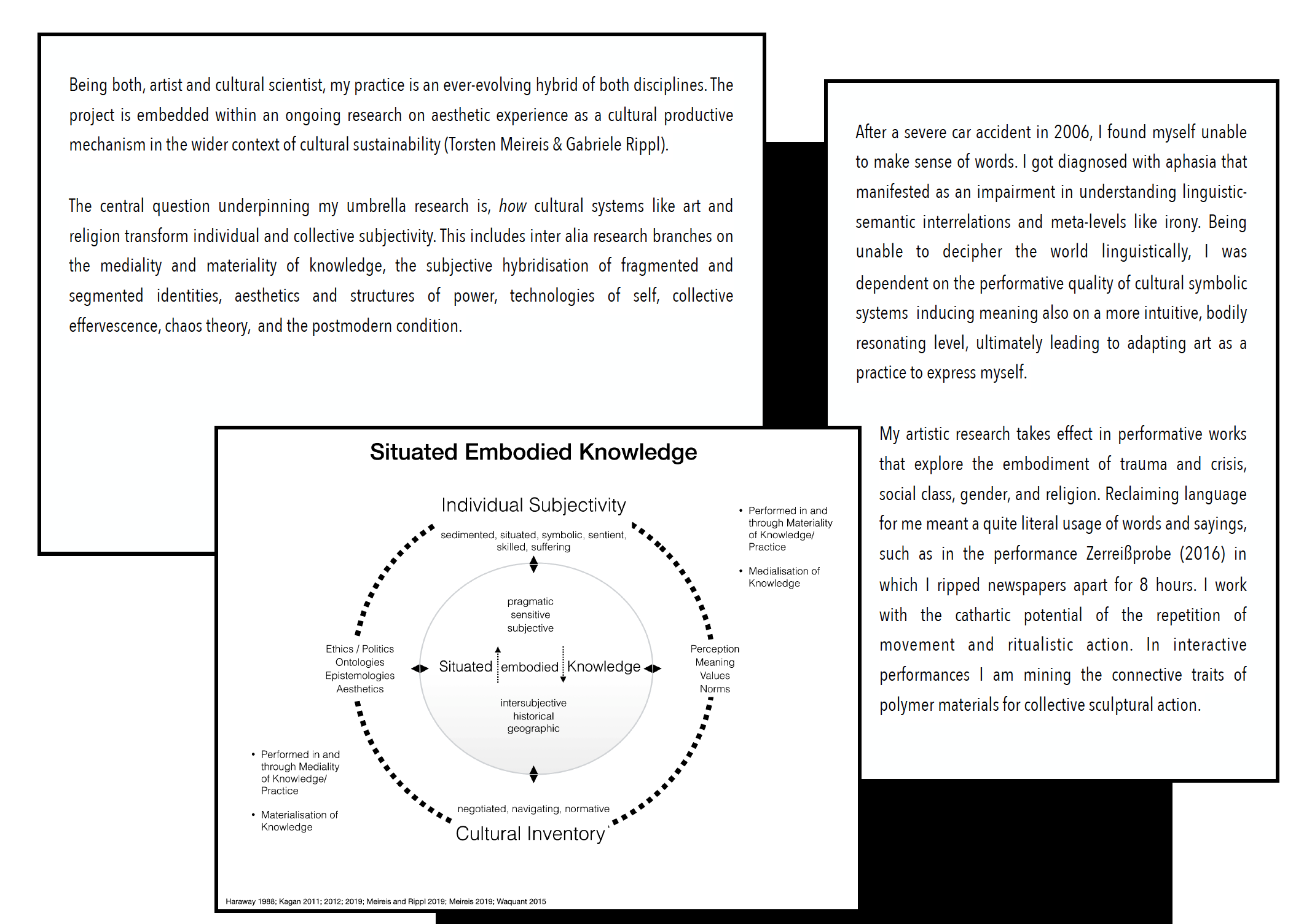
The project intends to create multimodal experience spaces within which new forms of aesthetic-aisthetic dialogue can flourish. It does so by inviting experts from various fields to take part in ritualised performative and transdisciplinary interactions that approach different levels of embodied knowledge: Symbolic, Situated, Sentient, Sedimented, Skilled, Suffering (Donna Haraway 1988; Loïc Wacquant 2015). The interactions serve the untangling of syntheses, the decoding of synchronicities, the creation of new synapses — to make transparent the sediments of disruptions hidden in our body archive, and to add new layers to it. The results will be presented in multi-sensory installations.
 Contct me: